


The Architecture of the Angle: A Technical Analysis of Valorant’s Tactical Geometry
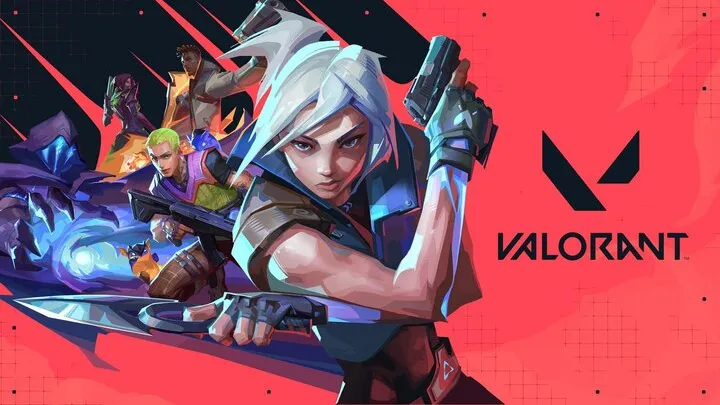
Valorant is frequently characterized as a "hero shooter," but this label obscures the rigorous mathematical and geometric framework that governs its high-level play. At its core, Riot Games has constructed a simulation where the primary conflict is not between characters, but between intersecting lines of sight and the physical constraints of virtual architecture. This article moves beyond surface-level gameplay to analyze the "Geometry of the Angle"—the technical interplay between player models, environment collision, and the sub-millisecond networking that defines the tactical shooter. By examining the game as a series of spatial puzzles, we can understand how Valorant redefines the relationship between human perception and digital space.
The significance of Valorant’s design lies in its "Precision Environment." Unlike more fluid movement shooters, Valorant imposes strict penalties on motion, effectively turning every corridor into a high-stakes calculation of probability. In the following chapters, we will dissect the technical evolution of map design, the physics of "Peeker’s Advantage," and the systemic impact of "Utility Displacement." We will explore how the game’s infrastructure—from its 128-tick servers to its "Fog of War" anti-cheat—dictates the very geometry that players must master to survive.
1. The Genesis of the Lane: Tactical Map Archetypes and Sightlines
The maps in Valorant are not merely aesthetic backdrops; they are carefully engineered "flow charts" of engagement. The early design philosophy, spearheaded by industry veterans, focused on the "Three-Lane" archetype but introduced the concept of "Mechanical Chokepoints." A map like Haven, with its three bomb sites, was a radical departure from the standard tactical layout, forcing a re-evaluation of defensive geometry. Every hallway is measured in "Time-to-Cross," ensuring that rotations are balanced against the attackers' potential for a fast push.
From a technical standpoint, these maps are built around "View Cones." Designers place obstacles not for visual flavor, but to break line-of-sight at specific intervals. This creates a "Rhythmic Engagement" model. When you move through a map like Bind, the geometry forces you to "clear" angles in a predictable sequence. This predictability is the foundation of the game’s tactical depth, allowing for the development of "Default" setups where every pixel of a doorway is accounted for by the defending team's crosshair placement.
2. Perspective Distortion: The Mathematics of Angle Advantage
In Valorant, where you stand relative to a corner determines who sees whom first. This is the "Perspective Advantage," a phenomenon dictated by the distance from the vertex of an angle. If Player A is closer to a corner than Player B, Player B will see Player A’s shoulder before Player A sees any part of Player B. This is not a glitch or a networking issue; it is a fundamental law of Euclidean geometry applied to a first-person frustum.
The Physics of the "Pivot"
- The Radius of Engagement: The further you are from a corner, the smaller the "Angular Velocity" required to track a moving target.
- The Tangent Peak: By "slicing the pie," a player minimizes their exposed hitbox while maximizing their field of vision.
- Model Centering: Because the player's camera is located in the center of the head, but the model has width, "Shoulder-Peeking" is a constant geometric vulnerability.
High-level tactical play is a constant battle to secure the "Longer Angle." This geometric reality is what makes certain positions "God Angles"—spots where the environmental collision boxes provide a mathematical advantage over anyone approaching from the most common paths. Mastery of this concept transforms the game from a test of aim into a game of spatial positioning.
3. The 128-Tick Paradigm: Networking and the "Ghost" of Position
Valorant’s decision to launch with 128-tick servers was a technical statement of intent. The "Tick Rate" is the frequency at which the server updates the game state. At 128-tick, the server processes every movement and shot every 7.8 milliseconds. This reduces the "Input Lag" and ensures that the "Interpolation" between player positions is as smooth as possible. However, this also amplifies the technical reality of "Peeker’s Advantage."
Even with 128-tick servers, the speed of light and physical distance between players create "Latency." When an attacker peeks a corner, they see the defender (who is stationary) based on the defender's position from 20-50 milliseconds ago. Meanwhile, the server must reconcile the attacker's new position and the defender's reaction. Riot’s "Riot Direct" backbone was built to minimize this "Asynchronous State," effectively trying to align the geometric reality of two players across thousands of miles.
4. Collision Boxes and Hitbox Alignment: The Invisible Skeleton
The "Hitbox" in Valorant is a collection of invisible geometric primitives—cylinders and spheres—that track the character's model. Unlike older shooters where hitboxes were often "loose" or lagged behind the model, Valorant utilizes "Server-Side Rewind." When you fire a shot, the server looks back in time to where that player’s hitbox was at the exact millisecond you clicked, according to your latency.
Technical Hitbox Characteristics
- Sync-Accuracy: The hitbox is tied to the skeletal mesh of the Agent, ensuring that "Crouch-Spamming" or "Jiggle-Peeking" doesn't detach the head hitbox from the visual head.
- Projectile Raycasting: Most weapons use "Hitscan," meaning a ray is projected infinitely in a straight line the moment the trigger is pulled.
- Wall Penetration: The "Penetration Value" of a wall is calculated based on the material's "Density" and the angle of the ray, determining the percentage of damage retained.
This invisible skeleton is the true arbiter of life and death. When a player complains about a shot not hitting, they are often witnessing a discrepancy between the "Client-Side" visual effects (like blood splatters) and the "Server-Side" hitbox verification. This geometric rigor is what allows for the game's competitive integrity.
5. Utility as Spatial Modification: The Geometry of Denial

Agents in Valorant do not just "use spells"; they modify the geometry of the map. A Sage wall is a temporary structural addition that creates new "Sightlines" and "Elevation Levels." A Viper smoke is a volumetric sphere that introduces "Visual Occlusion," effectively removing a piece of the map's geometry for a set duration. This "Dynamic Architecture" forces players to constantly re-map their understanding of the environment.
Types of Geometric Utility
- Vision Obscuration (Smokes): Removes the "Long Angle" advantage and forces close-quarters engagements.
- Area Denial (Mollies): Temporarily makes a piece of the floor "non-traversable," forcing players into predictable movement paths.
- Information Scans (Sova/Fade): Projects rays that check for "Collision Overlap" with enemy hitboxes, turning the geometry "transparent" for a brief window.
The master of Valorant isn't just someone who can aim, but someone who understands how to use utility to "narrow the cone." By placing a smoke, you are mathematically reducing the number of angles you need to check from ten to two. Utility is, in essence, a tool for simplifying the complex geometry of the map.
6. Elevation and the "Verticality Crisis"
Verticality in Valorant is a point of significant technical friction. Most tactical shooters are "Horizontal-First," but Agents like Jett, Raze, and Omen introduce "Vertical Displacement." This creates a "Y-Axis Disadvantage" for the defenders. The human eye is biologically better at tracking horizontal movement than vertical movement, and the geometry of the "Headshot Level" crosshair placement is shattered when an opponent can appear from the sky.
This verticality is limited by "Gravity Constants" and "Air Inaccuracy." To maintain the game's tactical identity, Riot implemented a severe accuracy penalty while in the air. This ensures that while you can modify your "Geometric Elevation," you cannot effectively engage in "Aerial Combat." The vertical space is a tool for "Repositioning" and "Surprise," but the "Resolution" of the fight almost always returns to the horizontal plane.
7. The Soundscape as Sonic Geometry
Sound in Valorant is a three-dimensional mapping of the environment. The game uses "HRTF" (Head-Related Transfer Function) to simulate how sound waves interact with the human ear and the virtual environment. Every footstep is a "Positional Ping" that reveals a player's coordinate in the geometric grid. The "Sound Circle" on the mini-map is a visual representation of the "Auditory Collision" radius.
High-level players use "Sonic Baiting." By making noise at a specific "Geometric Landmark," you can manipulate the enemy's mental map of the site. The interaction between sound and physical obstacles—like sound "muffling" through walls—is a technical layer that allows players to "see" through the geometry using only their ears. It is a secondary spatial system that runs in parallel with the visual frustum.
8. Recoil Patterns and the Geometry of the "Spray"
Recoil in Valorant is not random; it is a "Vector Offset." For the first few bullets, the gun follows a predictable "Recoil Path." After that, it enters a "Yaw" phase where the barrel moves horizontally within a defined "Probability Cone." Mastering the "Spray" is about applying a "Reverse Vector" to your mouse movement to keep the rays centered on the enemy hitbox.
Elements of Spray Geometry
- The "T" Pattern: The standard upward and side-to-side movement of the Phantom and Vandal.
- Bloom Expansion: The "Inaccuracy Circle" that grows larger as the trigger is held, representing the geometric limits of the weapon's precision.
- Movement Error: An "Additive Vector" that expands the bloom circle based on the player's current velocity.
The "Counter-Strafing" mechanic is the act of applying an equal and opposite movement vector to bring the velocity to zero instantly. This "Velocity Reset" is the only way to return the weapon to its base "Geometric Accuracy." It is a mechanical bridge between the movement system and the combat system.
9. The "Fog of War" and Information Asymmetry
Riot’s anti-cheat infrastructure includes a technical system known as "Fog of War." To prevent wallhacks, the server does not send the location of an enemy to your computer until they are "Geometrically Visible" or about to become so. This creates "Information Asymmetry." The server acts as the "Grand Arbiter," deciding which pieces of the geometric state are shared with which clients.
This system has a profound impact on "Game Sense." When a player "flicks" to an enemy they didn't know was there, they are overcoming the "Information Gap" imposed by the server. The "Fog of War" ensures that the game remains a test of "Reaction and Deduction" rather than just having the best software. It reinforces the idea that the map’s geometry is a physical barrier that even the computer must respect.
10. The Evolution of the "Default": Systemic Strategy
The "Default" is the ultimate expression of Valorant’s geometry. It is a pre-planned distribution of players across the map’s "Lanes" to maximize information and minimize risk. On a technical level, a Default is a "Grid Coverage" strategy. By placing one player in each lane, the team ensures that no "View Cone" is left unmonitored.
As the meta evolves, the "Default" shifts in response to map changes and Agent balances. If a map's geometry is changed (like the numerous reworks to Breeze or Lotus), the "Mathematical Optimal" for positioning changes. Competitive Valorant is a "Solvable Puzzle" that is constantly being redesigned. The "Default" is the temporary solution to that puzzle, a way to tame the chaotic geometry of the map into a structured, winnable game state.
Conclusion
Valorant is a masterpiece of "Spatial Constraint." It is a game where the most lethal weapon is not a gun, but a deeper understanding of the lines, angles, and volumes that make up its virtual world. From the 128-tick server architecture that verifies every shot to the Euclidean laws that govern perspective at a corner, the game is a celebration of tactical geometry. Success on the professional stage is not just about "cracked" aim; it is about the clinical application of positioning and the systematic manipulation of the environment. As Riot continues to add new Agents and maps, the "Geometry of the Angle" will only grow more complex, further refining the relationship between human intuition and the rigid logic of digital space. The arena is not just a place to fight; it is a grid to be solved.